Online Petition Analysis of South Korea
Three years of national petitions read through Giddens' structuration theory, using NLP to map where social reality moves faster than institutional law.
Overview
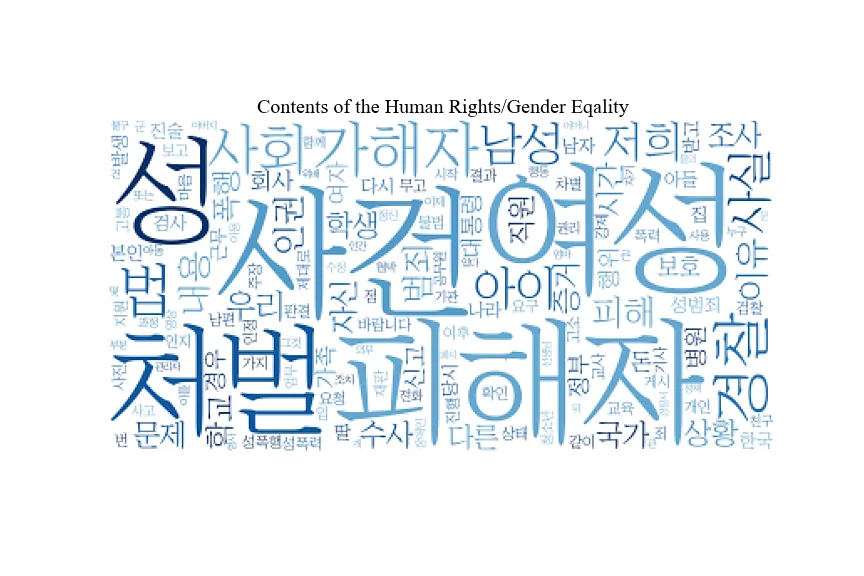
Research Question Do online petitions merely serve as a vent for temporary frustration, or do they reflect deep-seated structural societal fractures? This project initiated my transition from sociology to computational social science, driven by the desire to quantify public grievance. Theoretical Framework & Methodology I curated a dataset of online petitions from the South Korean presidential website spanning three years (2017–2020). Grounded in Anthony Giddens' Structuration Theory, I hypothesized that the semantic content of these petitions would mirror social structures and issues such as cultural lags: areas where social reality moves faster than institutional law. Key Insights Using Natural Language Processing (NLP), I mapped the landscape of Korean social conflict. The results revealed that digital petitions were not random noise but structured responses to specific systemic failures: predominantly digital sex crimes, patriarchy, and political polarization. Comparing the petition contents with those of the White House E-petition, We the People, revealed cultural differences. Academic Evolution What began as a student research project involving messy, unstructured data scraping evolved into an academic contribution. I refined the methodology over several years, leading to a poster at the 2021 International Postgraduate and Academic Conference — a joint postgraduate meeting across Japan, Korea and Taiwan — hosted by Chung-Ang University on 19 February 2021, and eventual publication in the journal PLOS ONE in 2024.
- Outcome
- Published in PLOS ONE, 2024
- Links